
Recovery After Liposuction for Lipoedema
Liposuction for lipoedema, on the legs, the arms or both, can be life-changing. It can ease pain, heaviness and discomfort, and improve mobility. The body heals in much the same way as after cosmetic liposuction. But patients often experience and understand that healing very differently, and most have questions about what is normal. Here are the ones I hear most often. My answers come from years of caring for lipoedema patients, and from shadowing lipoedema surgery at a leading clinic in Germany. That experience changed how I care for my patients.
How painful is recovery after lipoedema liposuction?
Many patients tell me the pain is more manageable than they feared. This is partly because surgery brings a sense of relief. The constant heaviness, aching and discomfort of lipoedema start to ease. Even so, soreness, tightness and discomfort are normal in the early weeks. Everyone experiences them differently.
How long does swelling last?
Swelling after lipoedema liposuction is expected, and it can last several months. In my experience, it is usually at its highest in the first couple of weeks. Then it reduces gradually, with the biggest visible change in the first month or two. Most of the remaining swelling settles within about six months. Some can take a little longer, depending on the person.
Every body heals differently. It depends on things like the extent of surgery, your lymphatic health and your lifestyle. So it is completely normal to still feel swollen after several weeks or even months. It is also normal for the swelling to go up and down as you heal.
Why do my legs or arms feel hard or lumpy, and what is fibrosis?
In short: hard or lumpy tissue is common after surgery, and it is not always fibrosis. Sometimes it is simply fluid that needs draining.
Fibrosis is the fibrous tissue your body makes as it heals. Sometimes it makes more than it needs, and you feel this as firmness or small lumps. But tissue can also feel hard because too much protein-rich fluid has thickened, almost like a jelly. That is not fibrosis. When it is drained slowly, it softens again. Draining it early also helps prevent fibrosis forming later. I see this in lipoedema patients, and after cosmetic liposuction and other surgery too.
This is why good lymphatic support and well-fitted compression matter so much. They help the tissue heal smoothly and evenly.
Is numbness or tingling normal?
Yes. During surgery, small nerve endings in the skin are temporarily affected. So numbness or tingling is common, and sensation gradually returns as you heal. If it continues for several months without improving, mention it to your surgeon so it can be checked.
Why do I feel so tired after surgery?
Fatigue is very common. Your body is using a lot of energy to heal tissue and manage inflammation. Rest is not a luxury. It is part of recovery. Let yourself rest, and don’t measure your progress against anyone else’s.
How long should I wear compression?
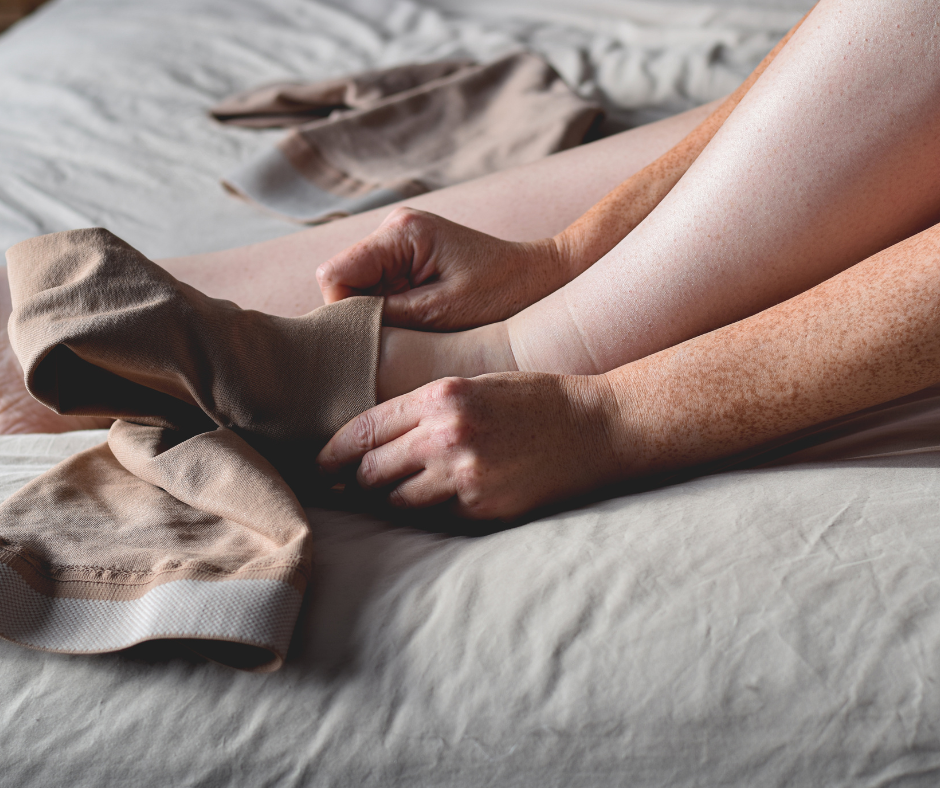
Always follow your own surgeon’s advice first. That said, compression is one of the most important parts of recovery. In my experience, two things make the real difference: the quality of the garment, and how long you wear it.
On quality, I have seen how careful the German surgeons are about made-to-measure compression. I now prescribe the same for my lipoedema patients. A garment fitted properly to your body supports the tissues far better than an off-the-shelf one.
On timing, my professional view is that you should continue compression for at least six months after surgery. Don’t stop after a few weeks. Lipoedema is a lifelong condition, so I see compression as something that stays with you long term. Once the inflammation and fluid have settled, the compression class can often be reduced. For example, you might step down from class 2 to a lighter class 1. This keeps things under control and guards against flare-ups.
In fact, I prescribe compression for life for anyone with lipoedema, even mild cases. The class depends on how it presents. Mild lipoedema needs a lighter class 1. More severe cases need class 2 or 3. The ideal is to wear it 24 hours a day, but I know nobody wants to live in compression all the time. So I try to be realistic. Wear it through the day and take it off at night to sleep, aiming for at least 12 hours a day. Wearing it for 12 hours is far better than not wearing it at all.
When can I move, walk and exercise again?
Most patients are walking within a few days. Gentle movement early on really matters. The lymphatic system has no pump of its own, so it only moves when your muscles contract.
Many patients don’t feel like moving at first. So for the first week, my rule is simple: every hour, walk for five minutes. Have someone with you, in case you feel dizzy. From there, build up gradually until you can walk for 20 minutes without feeling dizzy or tired. By about one month, you should be able to walk for an hour a day.
But movement needs balance. Doing too much, too soon is one of the most common reasons swelling suddenly gets worse. So build up gradually and listen to your body.
Light walking comes first. Other exercise depends on your healing. Leave swimming until all incisions are fully closed and healed, and reintroduce anything strenuous gradually.
Why do some days feel better than others, and can swelling come and go?
Recovery is not a straight line. It is completely normal to have good days and harder days, and for swelling to go up and down. Many things can affect it, such as activity, hydration, salt, alcohol, rest, stress and hormonal changes. A harder day does not mean something is wrong. It is simply part of healing.
When can I go back to work?
As a general guide, I usually ask patients to take around two weeks off. It is less about the type of job and more about movement. If you are on your feet all day, you use energy your body needs for healing. It is also easy to overdo it. At a desk, the opposite happens. You sit still for hours and the lymph slows down. By the end of the day, your legs, or your arms if they were treated, can be much more swollen.
If you have a desk job and feel well, you may be able to return after about a week. Ideally, be driven rather than walking a long way. Get up and walk regularly through the day. If your arms were treated, avoid heavy lifting and take regular breaks from repetitive arm work.
When can I fly after surgery?
This is an important one, and I feel strongly about it. My first concern is the risk of a blood clot. This risk is already higher after surgery, and it rises further when you sit still for hours on a flight. Cabin pressure also affects the lymphatic system. Even healthy people’s legs swell on a plane, so soon after surgery the effect is greater.
Where possible, I prefer patients not to fly in the early weeks unless they need to. A surgeon performs the operation, but the aftercare team often sees the tissue day by day, several times a week. We watch how it changes. From what I have seen, the gentler the journey home, the better the tissue tends to settle. I have cared for lipoedema patients who travelled home from Germany by train and recovered beautifully.
None of this is a reason to avoid surgery abroad. For lipoedema, some of the best care in the world is in Germany, where the made-to-measure compression is exceptional. It is simply about how you travel home. If you can, travel back by train or car rather than flying. You can stop regularly, get up and walk, and you avoid the cabin pressure. Many surgeons advise the same where it is practical. If you do need to fly, wear your compression and keep your legs moving during the journey.
Will lipoedema come back after surgery?
This is one of the questions I am asked most. The honest answer is that the long-term picture is still being understood. Surgeons using different techniques will tell you different things, so I am careful not to promise one way or the other. What I can say is that lipoedema is a lifelong condition. Looking after yourself afterwards really matters. Ongoing compression, movement, a healthy lifestyle and good aftercare all help you keep your result and keep the condition under control.
Is emotional recovery normal after lipoedema surgery?
Yes, very much so. Your body is healing, but you are also adjusting after a long medical and emotional journey. Many patients have lived with pain for years, and with how lipoedema made them feel about their body. It is normal to feel a mix of relief, impatience, vulnerability and hope, sometimes all in the same week.
I have written more about the emotional side of recovery in my article on the reality of cosmetic surgery, healing and mental health. Much of it applies to lipoedema surgery too.
Can Manual Lymphatic Drainage help after surgery?
Yes. Manual Lymphatic Drainage is often an important part of aftercare for lipoedema patients. It supports the lymphatic system, which is usually already struggling by the time someone needs surgery. It can help with swelling, discomfort, fluid movement and the softness of the tissue.
Surgeons who treat lipoedema commonly recommend a course of lymphatic drainage after surgery. The number of sessions depends on you and how you are healing. It is worth organising your aftercare before your surgery, so support is in place from the start. Check that your therapist is properly trained in post-operative lymphatic drainage, and that they understand lipoedema.
When should I seek urgent help?
Most recovery goes smoothly, but some signs need prompt attention. It is especially important to know the signs of a blood clot. This is a risk after any surgery, particularly surgery on the legs.
Call 999 or go to A&E straight away if you have:
- Pain, tenderness or swelling in one calf, leg or arm
- Sudden breathlessness or chest pain
- Coughing up blood
Contact your surgeon or GP the same day if you notice:
- Signs of infection, such as spreading redness, heat or fever
- Unexpected or severe pain
- Unusual swelling in one area
- A suspected seroma, or fluid build-up
- Any concern about how a wound is healing
If in doubt, always ask. It is far better to check than to wait and worry.
How long until I see the final results?
Some change is visible soon after surgery, once the fatty tissue has been removed. But swelling hides the true result at first. Final results usually take around six months or longer to show fully, as the swelling settles and the tissue refines.
What helps recovery the most?
Several things work together: gentle regular movement, a balanced diet, low salt, good hydration, well-fitted compression and lymphatic support. Following your surgical team’s guidance matters too. No single one is magic. Together, they give your body the best chance to heal well.
What do patients worry about most?
The worries I hear most are slow progress, swelling that lingers, ups and downs from day to day, and comparing their recovery with others. Please try not to compare. Every lipoedema journey is different, and healing times vary a lot from person to person.
What I learned from being in the operating room
In May 2026, I shadowed the team at Lipo.Clinic, a leading lipoedema clinic in Germany. I sat in on consultations and watched how the surgeons decide who is the right candidate. I was also present for the surgery itself. By chance, one patient that week had already booked her aftercare with me in London. So I followed her whole journey, from the operating table to my treatment couch.
The surgeons used a water-assisted technique, sometimes called WAL. A gentle jet of water loosens the fat, which helps protect the blood vessels and surrounding tissue. They also work in stages, rather than removing a lot of fat in one go. Laser-assisted liposuction is another recognised approach used by some surgeons.
The experience changed how I care for lipoedema patients. I used to see the surgery as purely medical, focused on swelling and pain. Now I understand it is a medical surgery with an aesthetic purpose too. So I care just as much about leaving the skin and tissue as smooth as possible.
What I wish more patients knew before surgery
Recovery is gradual, with physical and emotional ups and downs. It takes time before the final result shows. Planning your aftercare is just as important as the surgery itself. And remember, this is a medical surgery, done to improve your health and how you feel in your body. Be patient and kind with yourself. Good things take time.
Support with your recovery
Would you like help with your aftercare, managing lipoedema long term, or made-to-measure compression? You can find out more about post-operative recovery and aftercare and specialist lymphatic care for lipoedema, or book a consultation.
About the author
Yaneth Perea is a Post-Surgery and Lymphoedema Therapist with over 30 years of clinical experience. She specialises in recovery and aftercare after surgery. She works closely with patients recovering from lipoedema liposuction and cosmetic surgery. She is registered with MLD UK and the British Lymphology Society.
This article is for general information and support. It is not medical advice and does not replace guidance from your own surgeon or healthcare team. Always follow your surgeon’s instructions, and seek medical help promptly if you have any concerns during your recovery.

